The landscape of education is rapidly evolving, and at the forefront of this transformation is the rise of artificial intelligence (AI). At this year’s Online Learning Innovation Summit (OLIS) hosted by the University of Alabama, I had the opportunity to present my thoughts on this crucial topic. As an educator and instructional designer, I’ve been closely following these developments, and I believe it’s time we had an honest conversation about AI in our classrooms.
Let’s face it: AI is here to stay. The genie is out of the bottle, and no amount of hand-wringing or prohibition will change that fact. Recent reports suggest that a significant portion of college students are already using AI tools like ChatGPT for their schoolwork. By some estimates, 30% of students used such tools in the past academic year alone.
Rather than fighting against this tide, I argue that we need to adapt our approach to education. The question isn’t whether students will use AI, but how we can guide them to use it ethically and effectively.
Many educators have valid concerns about AI use. Will it hamper students’ creativity? Could it lead to an over-reliance on technology? How do we ensure fairness and prevent bias? These are all crucial questions that deserve thoughtful consideration.
Some institutions have turned to AI detectors in an attempt to catch students using these tools. However, I believe this approach is fundamentally flawed. Not only are these detectors often inaccurate, but they’re also relatively easy to fool. More importantly, they miss the point entirely. As Tim Gorichanaz astutely noted, “AI detectors will only ever be able to detect AI-generated text, not AI-generated ideas about which students have written in their own words.”
So, what’s the way forward? I propose a more nuanced, forward-thinking approach:
Open Dialogue: We need to have regular conversations with students about the ethics of AI use. When is it appropriate? When does it hinder learning? By fostering this dialogue, we can help students develop a more sophisticated understanding of these tools.
Redesigning Assessments: Our assignments must evolve to promote critical and creative thinking in ways that AI can’t replicate. This might involve more project-based learning, oral presentations, or assignments that require students to critique AI-generated content.
Embracing Transparency: Instead of trying to catch students using AI, why not encourage them to be open about it? I suggest implementing an “AI Transparency Declaration” where students can affirm whether they’ve used AI tools in their work.
Teaching AI Literacy: It’s crucial that we educate students about the limitations of AI, including its potential for bias and misinformation. By doing so, we’re preparing them to be discerning users of technology in their future careers.
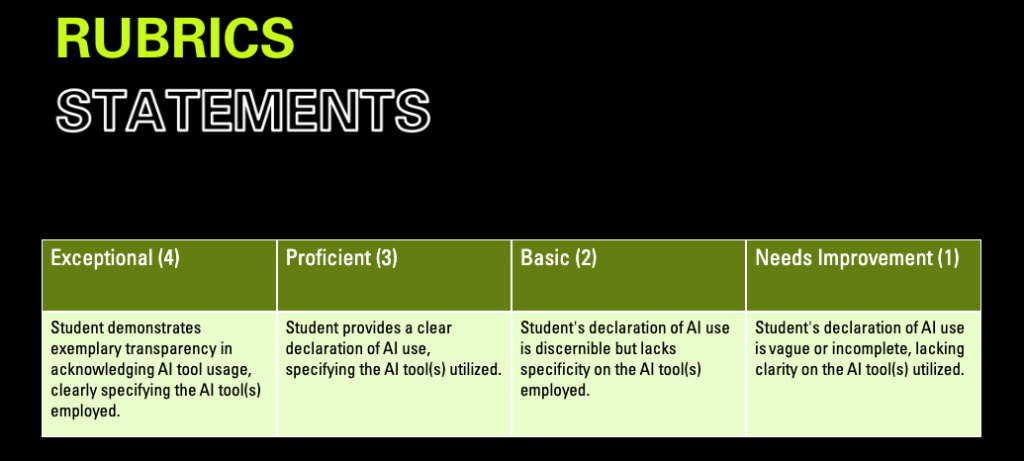
Updating Rubrics: Our grading criteria should reflect this new reality. We can include points for proper citation of AI use and for demonstrating how AI tools were used to enhance, rather than replace, original thinking.
The integration of AI into education doesn’t spell the end of academic integrity or critical thinking. On the contrary, if handled thoughtfully, it presents an opportunity to deepen these skills. By teaching students to use AI as a tool for enhancing their work – rather than a crutch or a shortcut – we’re preparing them for a future where human creativity and machine efficiency work in tandem.
As educators, our role is evolving. We’re no longer just imparters of knowledge, but guides helping students navigate an increasingly complex technological landscape. It’s a challenging transition, but also an exciting one. By embracing this change, we can ensure that our educational practices remain relevant and effective in the age of AI.
What are your thoughts on AI in education? How have you approached this in your own classroom or institution? I’d love to hear your perspectives in the comments below.
“AI detectors will only ever be able to detect AI-generated text, not AI-generated ideas about which students have written in their own words.”
– Tim Gorichanaz